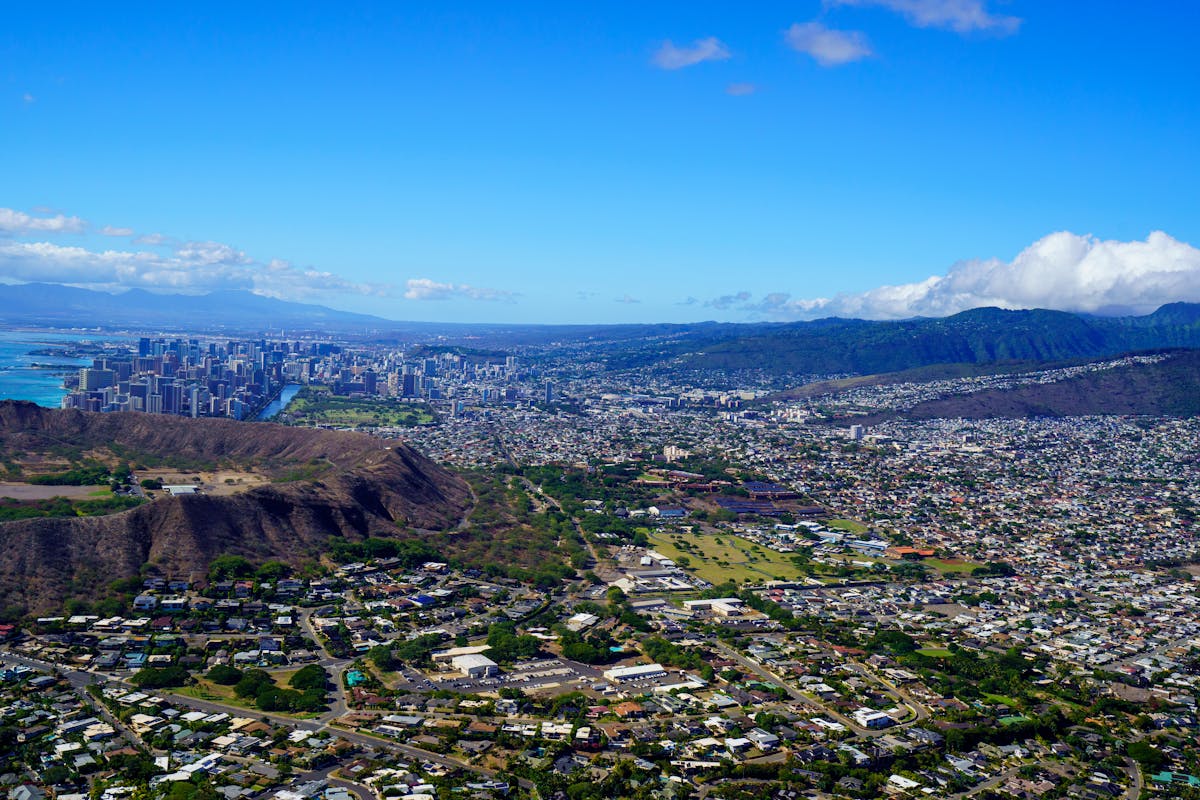
Rising 760 feet above Waikiki, Diamond Head (Lēʻahi) is the most recognized landmark in all of Hawaii. A 300,000-year-old volcanic crater, it guards the eastern edge of Honolulu with a silhouette so iconic it appears on stamps, postcards, and the opening credits of Hawaii Five-O. Inside this ancient tuff cone you'll find WWII military bunkers, a lighted tunnel, steep switchback trails, and some of the most breathtaking 360° views in the Pacific.
The hike threads through a 225-foot lighted tunnel, past century-old military fire control stations, and up 99 spiral steps to emerge at a summit with sweeping views from Koko Head to the Waianae Mountains. Whether you're a first-time visitor or returning after years away, Diamond Head never disappoints.
The Name: Lēʻahi vs. Diamond Head
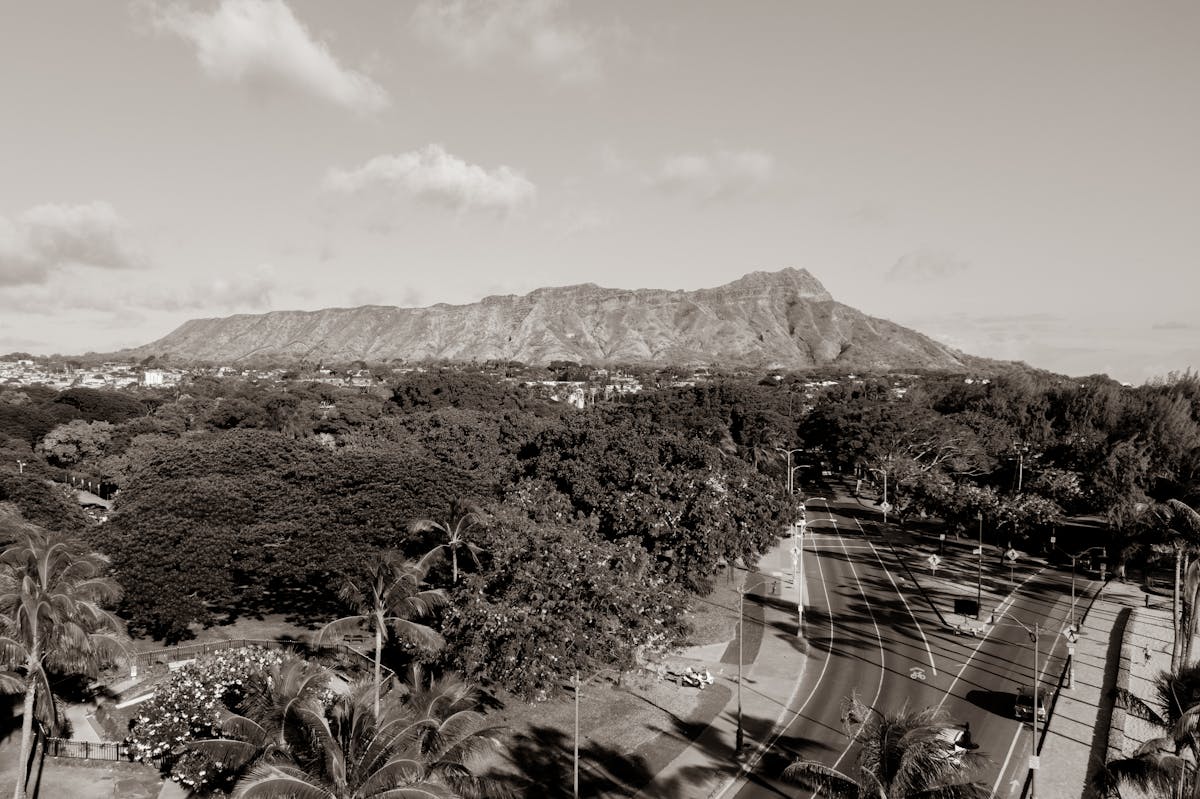
The ancient Hawaiian name Lēʻahi (pronounced lay-AH-hee) is far more poetic than the English version. It combines lae (brow or promontory) and ʻahi (yellowfin tuna) — because the crater's ridgeline, when seen from the ocean, resembles the dorsal fin of an ahi tuna slicing through the water. To ancient Hawaiian voyagers navigating the open Pacific, that silhouette was a landmark that meant home.
The English name came later — and from a mistake. In 1825, British sailors discovered glittering crystals on the adjacent beach and believed they had found diamonds. They hadn't. The sparkling minerals were calcite crystals, completely worthless. But the name "Diamond Hill" — later shortened to Diamond Head — stuck, and Hawaii's most recognizable landmark was forever named after a geological misidentification. The Hawaiian name Kaimana Hila (a phonetic borrowing of "Diamond Hill") is still used locally today.
Ancient Hawaiian navigators called it Lēʻahi — the tuna's brow. British sailors called it Diamond Head. Both names describe the same silhouette that has guided people home across the Pacific for centuries.
— HI Private Tours GuideGeology: A Single Explosive Eruption
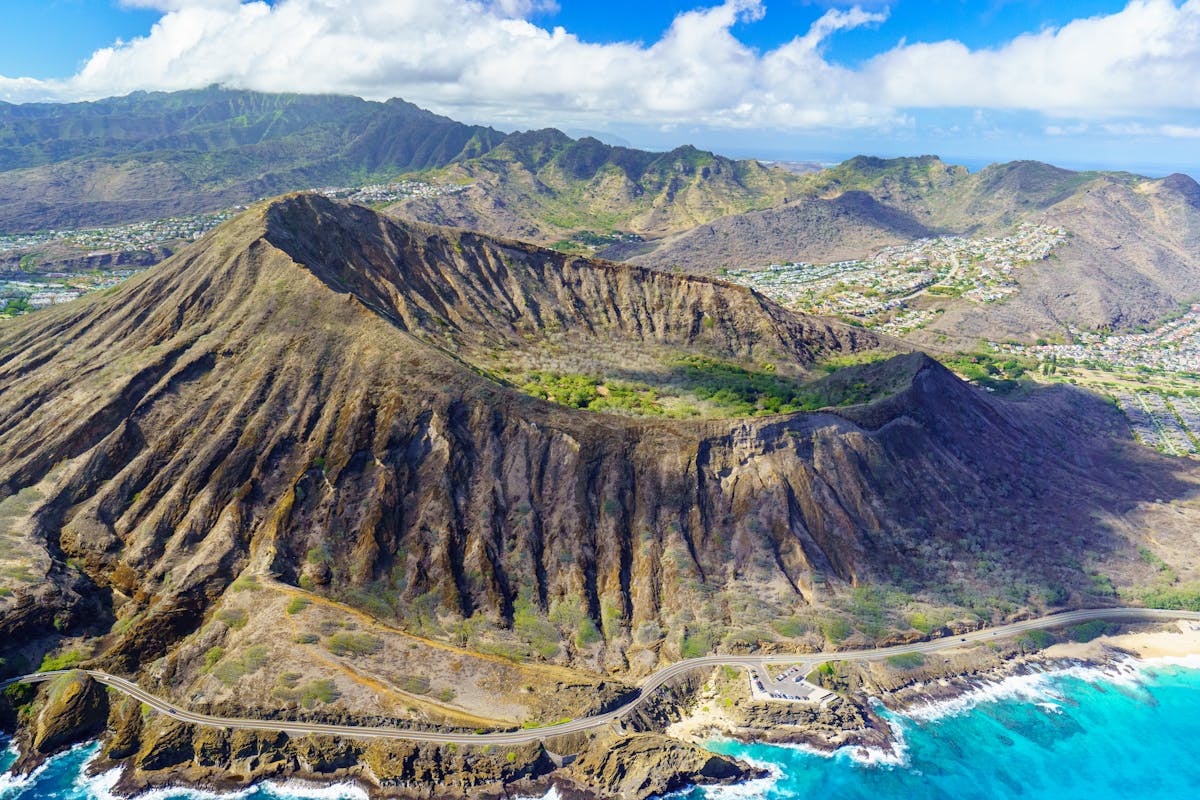
Diamond Head is a volcanic tuff cone — formed not by slow lava flows, but by a single explosive eruption approximately 300,000 years ago. When rising magma hit the ocean water table beneath Oahu, it triggered a violent steam explosion. Ash, cinder, and rock fragments were blasted into the air, and as they fell and compacted, they created the distinctive layered tuff walls of the crater.
The eruption lasted just one event — Diamond Head has been geologically dormant ever since. It is part of the Honolulu Volcanic Series, the same chain of eruptions that formed Punchbowl Crater, Hanauma Bay, Koko Head, and Manana Island. The crater itself spans 475 acres and the interior — where the hiking trail begins — sits 300 feet below the summit rim.
Military History: Fort Ruger & WWII Bunkers
Diamond Head's commanding views made it strategically invaluable. The US military recognized this immediately after annexing Hawaii in 1898, establishing Fort Ruger — the first US military reservation on Hawaiian soil — inside the crater.
The Hike: What to Expect
The trail is 0.8 miles to the summit (1.6 miles round trip) and gains 560 feet in elevation. It's rated moderate — manageable for most fitness levels, but genuinely steep in places. The last stretch involves 99 spiral stairs inside the old military observation tower. Allow 1.5 to 2 hours total including time at the summit.
Trail Highlights Along the Way
The concrete path transitions to a natural volcanic tuff surface about 0.2 miles up, with multiple switchbacks climbing the steep crater interior wall. About two-thirds of the way up you enter the 225-foot lighted tunnel — carved through the volcanic rock by the US Army in 1908. It emerges at the Fire Control Station, where you can explore the original observation slits and bunkers. From there, 99 spiral stairs lead to the summit platform.
⚠️ Reservations are required for all non-residents and must be booked at gostateparks.hawaii.gov up to 30 days in advance. Entry: $5/person · Parking: $10/car. The park is open daily 6am–6pm, last entry 4:30pm. Closed Christmas Day and New Year's Day. On a private tour, your guide handles all reservations and logistics.
Diamond Head Crater Festivals
Few people know that the crater floor once hosted one of the wildest concert series in American history. Starting on New Year's Day 1969 — often called "Hawaiian Woodstock" — the Diamond Head Crater Festivals drew crowds of over 75,000 people for all-day music celebrations throughout the late 1960s and '70s.
The lineup was extraordinary: Grateful Dead, Santana, Journey, Styx, War, Tower of Power — alongside beloved local Hawaiian acts like Cecilio & Kapono and the Mackey Feary Band. The events grew from one-day festivals to two-day affairs by 1976–77, before the Hawaii Department of Land and Natural Resources shut them down over noise and environmental impact concerns. The crater has been quiet ever since — but the legend of those festivals lives on.
Movies & TV Shows at Diamond Head
Diamond Head's silhouette is arguably the most filmed skyline in Hawaii. Its profile appears as a backdrop in dozens of productions, but several have made it a central character.
Set almost entirely around Waikiki and Diamond Head, this was the film that put Hawaii on the map as a tourist destination. Elvis plays a GI returning from the Army who defies his wealthy family to become a tour guide in Honolulu. The Diamond Head skyline appears throughout as the defining backdrop of Oahu.
A drama named for the crater itself, starring Charlton Heston as a powerful Hawaiian land baron. Originally planned for Clark Gable, who died before production began. The film features early John Williams score work and offered a rare portrayal of 1960s Hawaii with a largely local cast. The Royal Hawaiian Hotel and Oahu locations appear prominently.
Diamond Head's crater served as a filming location for studios used in the original Hawaii Five-O (1968–1980) — one of TV's longest-running police dramas, and later for the 2010 reboot. The silhouette of Diamond Head appears in virtually every exterior shot of Honolulu throughout both series' combined 22 seasons. Magnum P.I. (1980 and 2018 reboot) similarly used Diamond Head as its defining backdrop.
From Elvis to Charlton Heston to Steve McGarrett, Diamond Head has been the backdrop of choice for filmmakers who want to say "Hawaii" in a single shot. No other natural landmark in the state carries the same cinematic weight.
Satellite Map & Location
Diamond Head State Monument sits on the eastern edge of Honolulu, just 2 miles from Waikiki. The entrance to the crater is on Diamond Head Road — your guide on a private tour handles the drive, parking reservation, and timing to beat the midday crowds.
Visitor Tips & How to Have the Best Experience
💎 Pro Tips from Our Guides
- ⏰Book the 6am–8am slot — the earliest reservation is the coolest, least crowded, and has the best morning light for photos. Popular sunrise slots sell out within hours of the 30-day booking window opening.
- 💧Bring at least 1 liter of water per person — there is almost no shade on the trail and it gets hot fast. The vending machines in the crater sell water if you forget.
- 👟Wear proper shoes — closed-toe shoes with grip are essential. The volcanic tuff surface is uneven and the last stretch of stairs is steep. Flip-flops are genuinely dangerous here.
- 📸Best photo spot — the summit lookout facing west gives you the classic Waikiki-to-Koko-Head panorama. Get there early to avoid the crowd at the railing.
- 🚌Take TheBus Route 23 — if you're avoiding the $10 parking fee, TheBus drops you at the crater entrance and saves you the hassle of finding parking in the crater lot.
- 🎧Get the audio tour — the official State of Hawaii narrated audio tour ($7.99) is available in 7 languages and covers the geology, military history, and Hawaiian culture in detail.
- 🐋Whale watching from the summit — December through April, humpback whales are sometimes visible breaching offshore from the summit platform on clear days.
- 🚫No pets allowed — service animals only. The park is strict about this rule.